
“Boris has one of those voices that just gets better with age and time. He has the smiling snarl of Tom Petty or Bruce Springsteen spinning Nebraska tales of hard work and hard living.” -Time Passed and Time Passing-Music Reviews, Marc Higgins 27/07/20
Short Bio
If you want something real and raw like tapping into a delicious mountain spring then you will appreciate the wondrous songs of Boris McCutcheon. He grew up riding horses in rural New England, finding refuge in music, the natural world and inspiration from the hard edged working class heroes of his life. This deep connection can be experienced in the multi sensory and vividly authentic songs that populate his records. Like a mycelium network his musical, influences span, diverse genres, including folk, traditions, blues country, jazz, and rock 'n' roll.
At the age of seven Boris's perception was “changed forever” when he first heard John Prine’s, song “Paradise”. This pivotal moment not only highlighted the impact of storytelling but also unveiled the powerful potential of songwriting, even amidst the metaphorical destruction wrought by Mr. Peabody’s Coal Train. He was further captivated by the crooning vibrato of Neil Young's "Helpless," Bob Dylan's poetic brilliance in "Like a Rolling Stone," Jimi Hendrix's astounding "Wind Cries Mary," and Joni Mitchell's "River," which perfectly echoed the loneliness of his youth as an only child wandering the frozen ponds of New England.
Before graduating high school, Boris was already a published poet; however, his passion soon shifted to songwriting and farming. In 1989, he crossed paths with the legendary Ralph Rinzler, former mandolinist for the Green Briar Boys and a pioneer of the Smithsonian Folk Archive and Festival. Rinzler not only provided Boris with guitar lessons but also introduced him to the deeper works of Woody Guthrie, and the cosmic American folk Anthology of 'Harry Smith.’ Ralph had a priceless collection of early American recordings on wax cylinders. After Christmas in 1990 Ralph entrusted Boris to drive his collection of wax cylinders from Washington DC to Ojai California.
Along the way, Boris fell in love with the mountains and open spaces of New Mexico, a place he would eventually call home. During this time, he quietly crafted a collection of songs, playing only for a small circle of friends until a chance encounter with a stuttering ex-junky encouraged him to form a blues band. This moment marked a transformation as Boris emerged from his introverted shell, overcoming his stage fright and performing for live audiences for the first time in his mid-20s.
Boris's musical career continued to flourish, and after a series of eclectic jobs and wild adventures with friends, he returned to his birthplace in Woods Hole, Massachusetts. There, he fully dedicated himself to music and songwriting, which inevitably led to the formation of an exceptional band in Boston. Over the past two decades, Boris and the Salt Licks have embarked on European tours and produced award-winning albums, leaving an indelible mark on the ‘Americana’, Folk and Alternative Country music scene.
Bittersweet, never pretentious, with the faint odor of sage and pine cones, the music of New Mexico-based songwriter Boris McCutcheon is rooted in country, rock, traditional folk and blues songs, but has long defied even those genres.
Accolades
Boris McCutcheon’s performances are dynamic and captivating. His musical style encompasses both rock and folk influences, reminiscent of outlaw storyteller Steve Earle and prolific underground songwriter Michael Hurley. Hailed as a master of the western waltz, his high-desert-folk-core sound falls into a category all its own. McCutcheon has garnered recognition as an “Americana icon” and “King of Americana” in the Netherlands, where he is celebrated for his contemporary interpretation of American roots music. His music emphasizes the themes of home, storytelling, and wilderness, infused with a soulful, poetic, and humorous flair.
An award-winning songwriter, McCutcheon is credited for inventing the genre of “New Mexicana”. Over the course of two decades, he has embarked on extensive European tours, collaborating with esteemed acts such as Los Lobos, Asleep At The Wheel, The Gourds, Calexico, and Ryan Adams. His performances are often accompanied by his band, ‘The Salt Licks’.
Latest Projects
In 2023 Boris moved with his wife, Laura and their two children Niamh and Jack to Beijing China where they live for 2 and 1/2 years. It was not easy for the McCutcheon's to transition into a mega city. After all the McCutcheon's were off the grid country mice and by the time they felt comfortable, identifying as city mice, it was time to leave.
From the ‘horses mouth’
“These days, expect to hear a lot of of new material from my experience living in China for 3
years. As you can imagine there was a lot to observe and write about in my daily experiences
good and bad. From this "parallel universe" of living and traveling in China comes his my latest
project entitled, “Beijing Survival Guide”
Here are some song titles from this yet to be recorded concept album: “Beijing Survival Guide,
Please Don't Say Anything, Scooters, Chinese Strawberries. Every time I talk in Chinese, They
Like To Fish, Bench Years” These songs explore ‘freedom” and censorship, the purpose of being
an artist, mid life questions of mortality and how bad governments can really screw things up for
a lot of good people.” -Boris
Presently
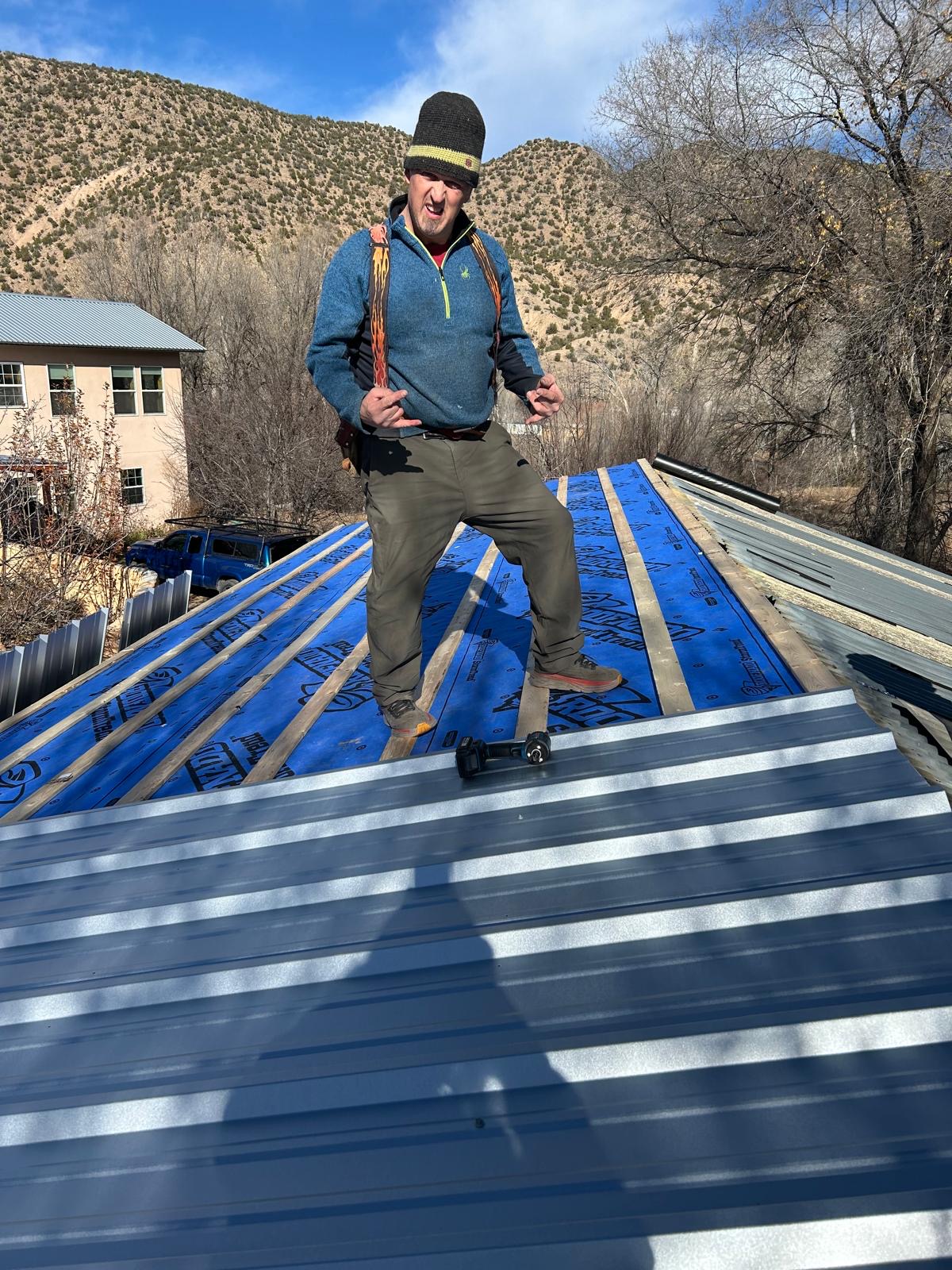
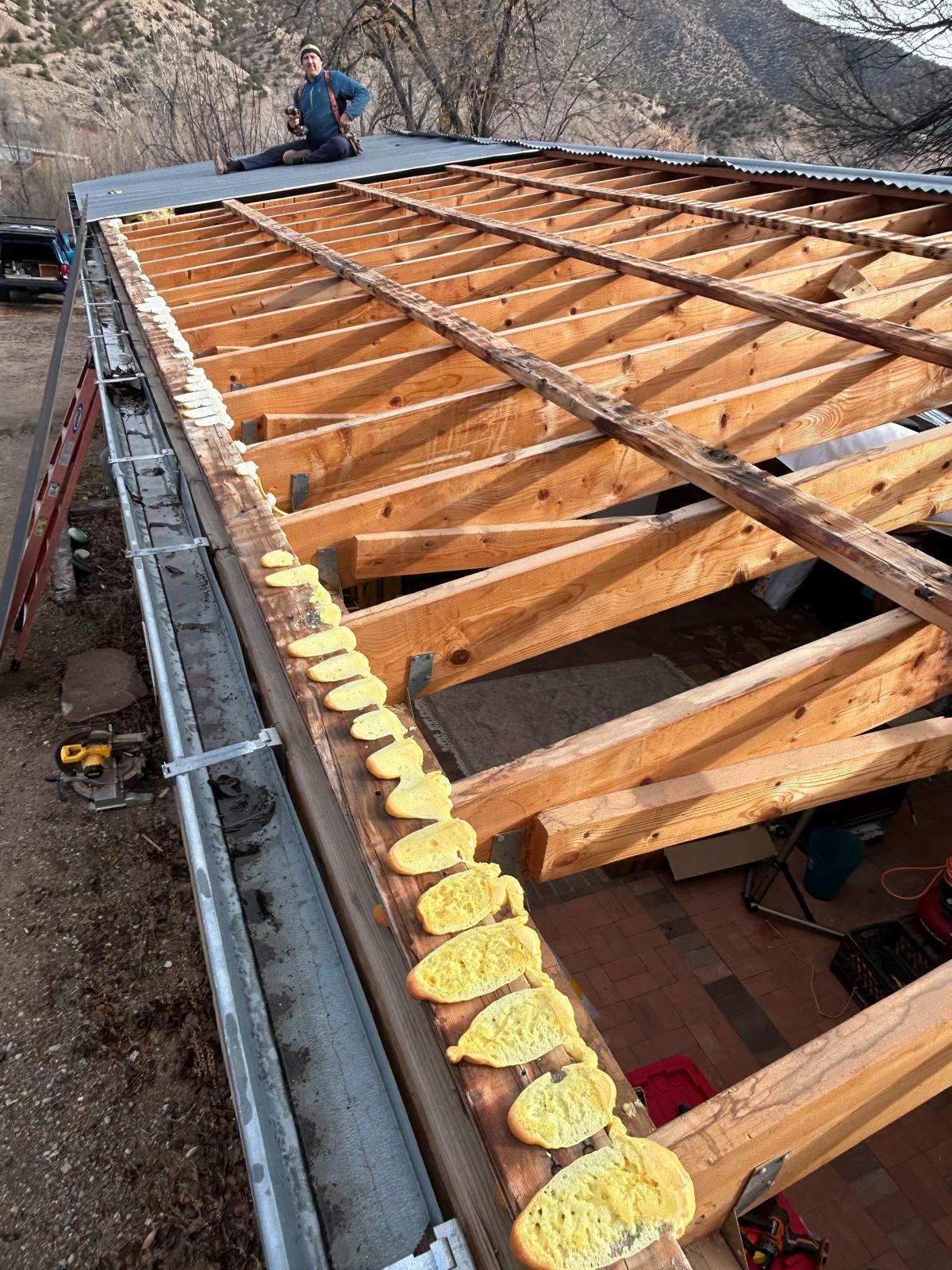
Boris is finishing up a degree at Berklee Online and prepping his studio for oncoming recording projects. He just finished putting a roof with insulation on his studio with good friend and pedal steelist Chris McGandy. After the fourth day of construction Chris suggested calling the studio, “Little Pink”not because of all the foam insulation but as reference to the famous House/Studio where Bob Dylan and ‘The Band” recorded “The Basement Tapes”. This isn’t a “big’ stretch because Chris had worked very closely in the past with the late drummer of The Band, Levon Helm.
Biography
McCutcheon (b. 1969) grew up in rural Holliston, Massachusetts and in the Elizabeth Islands off the coast of Cape Cod. Before entering the music industry, McCutcheon attended Marlboro College in Vermont where he studied creative writing. He also attended the prestigious Farm and Garden Program at UC Santa Cruz, where he learned practical organic farming. Before leaving New England for California, McCutcheon had encountered the legendary folk musicologist and mandolin player Ralph Rinzler, who made a deep impression on him. At that time, McCutcheon was discovering his identity as a songwriter and guitarist.
On a road trip across the West, McCutcheon also discovered New Mexico. But he left the West at the end of 20th century and returned to the East Coast to launch his music career. He assembled a roots rock band, and performed his first gig at the Captain Kidd in Woods Hole, MA, and quickly moved into the prestigious folk-roots scene in Boston. He became a regular, appearing on the stages of Club Passim, the Lizard Lounge, the Middle East, and the Cantab. McCutcheon released his first album Mother Ditch (2001) which was produced and engineered by Pete Weiss (Aimee Mann, Vapors of Morphine). Both press and fans took notice of his unique songs, voice, and arrangements (with tuba, Moog, Wurlitzer, megaphone), and he garnered an instant (if small) fan base on both coasts.
He released his sophomore album When We Were Big (2003) produced and engineered by Craig Schumacher (Calexico, Neko Case) at Wavelab Studios, Arizona. McCutcheon’s band, Boris & the Salt Licks, began to tour through Holland, Belgium and Germany each year and found a home in the LDM stables alongside other favorite artists including Greg Trooper, Rod Picott, Frazey Ford, Dayna Kurtz and many others.
With a cult hero reputation in Europe, and selling out large and small venues, McCutcheon moved to New Mexico, and made a permanent home there. He consolidated his core band, and with the Salt Licks (Brett Davis, Susan Holmes, Kevin Zoernig, Paul Groetzinger) began recording at Santa Fe’s Frogville Studios, a boutique indie house for alternative and traditional Americana music.
The first album out of Frogville by Boris & The Salt Licks was Cactusman vs. The Blue Demon (2006). The album was produced and mixed by Boris and piano savant Kevin Zoernig, whose keyboard arrangements brought some intensive jazzy improvisations to McCutcheon’s unique compositions. Cactusman debuted at #1 on the Euro Americana Chart, and stayed in the top ten for more than six months. On the other European chart of note, Americana & Roots Top 13, based on airplay, internet, sales and downloads, every one of McCutcheon’s albums has entered and stayed in the top ten. After Cactusman, McCutcheon and the Salt Licks were in demand all around the uptown and downtown theatres, bars and breweries of New Mexico.
McCutcheon lived off-the-grid near Ojo Sarco with a mile marker as an address, started a farm and a family with his wife, Laura McInerney. In this period, every gig started with an hour-long drive along the high road to Taos, through canyons and cone shaped hills, and finally to the state road and through the Carson National Forest to reach a highway. During the years from 2006- 2012, McCutcheon released his “off-the-grid trilogy:” Bad Road, Good People (2008), The Wheel of Life (2010), and the blockbuster finale Might Crash! (2013). In addition to these, he made a couple of praised compilation albums, a live album from the Netherlands, an EP, a music video, and a bootleg acoustic solo album of Townes Van Zandt cover songs, recorded from the creaky car seat that served as the only chair in the shed. At the 2007 NM State Fair, McCutcheon won the state’s coveted Best Singer Songwriter award.
Commercially, he has had a number of his songs licensed as both source music and feature cues on television and radio dramas. NPR’s Click and Clack (Car Talk) couldn’t stop laughing and playing his song “Pilgrim” – about a man’s dying old truck. The Peabody-winning and very hip Moth Radio Hour just recently licensed “Choppin’ Wood” - McCutcheon’s definitive, elegant song off his very first album. From Saving Grace to Hulu’s Shut Eye, and many in between, television has been a home for his music.
In live performance, McCutcheon, with or without a backing band, has been on just about every competitive festival stage and showcase that the music business offers to young or mature, unique or familiar, traditional or alternative songwriters: SXSW, The Moab Folk Festival, AmericanaFest, Folk Alliance, Mountain Stage and barns and concerts all over this country. In the Netherlands, McCutcheon has made appearances at the top three Americana festivals: Roots of Heaven, Take Root, and Blue Highways. From the East Austin honky-tonk The White Horse to Lincoln Center, McCutcheon’s work continues to please audiences. When you think he can’t outdo his last album, out comes a new and different and better one. I’m Here Let Me In (2017) is his first album without the Salt Licks band in over a decade. Pre-release reviews are as positive as any in his career to date.
In 2017-2018 Boris started a new project/band/duo with Bard Edrington called “High On The Hog” which was shortened to HOTH Brothers by DJ Susan Dilger. HOTH Brothers recorded an album with Sarah Ferrell the bass player and original member of Three String Bale, and drummer Greg Williams, both from Albuquerque. This album in 2019 won Album of the Year at the New Mexico Music Awards. The HOTH Brothers released a second album Tell Me How You Feel in 2021 near the end of the pandemic. The opening track song, “Judith” won Best Folk Song of the Year at the New Mexico music awards.
In 2022, Boris created a true solo album in his shed called, Pocket Hang Glider. In this collection he played all instruments and mixed it entirely as an experiment.
When We Were In The Garden
The story of our apprentice days in Santa Cruz, CA, by writer Mark Ray Lewis, Boris's longtime friend and collaborator.
We lived in tents in an open grassland that was edged on the perimeter by a dense forest on three sides. The fourth side spilled downhill toward the ocean. We had arrived at the beginning of April, after the last of the drenching winter rains. Our little tent city was sanctioned by an ancient arrangement that had been secured by an old English gardener who seemed to have figured out how to overcome any obstacle by leading with a large bouquet and vegetables and plums and strawberries and dripping honeycomb. We were there to learn this same trick. Or at least how to grow these things.
A total of 40 tents had been setup under a line of sweeping Cypress trees that had been planted as a windbreak. Boris' tent was about 23 tents away from mine and it was an old green canvas family tent that was tall enough to stand. It was empty except for a duffle-bag full of clothes and sleeping-cot on one side. In an opposite corner, a black widow spider took up residence and Boris left her in peace, like a roommate that clearly preferred being left alone.
We woke at first light and walked up the hill to a sloping garden that had been carved out of a dense parcel of forest. We had only hand tools: an English bulldog spade and a fork and a hard rake. We drove stakes to run string like masons building a wall. We dug and forked and raked the soil until the beds were straight and flat and dark and delicious and ready for seeds. We broadcast seeds by hand across this fine surface and took turns watering, directing the water toward the sky so it would crest and arc and fall back like gentle rain.
We took turns in the kitchen in a shared rotation and everything we made was from scratch— fresh bread and muffins and cakes and scones and colorful stir-fries and salads from the garden. After lunch, we walked over to a cold spring in a shady and secluded part of the forest. The pool that formed below the spring was not much larger than a bathtub and so we had to stand naked as we waited our turn to jump in solo, gripping a large root. It was impossible not to scream when our warm worked muscles and sweaty skin hit that cold water. We sun-dried ourselves in a small open grassland clearing. We were beautiful and insecure. We were exhilarated and shy and quiet lying there on the grass of the meadow until the sun and air had dried us and we dressed and went back to work.
We spent hours harvesting buckets of flowers and vegetables to sell at a farm-stand on a busy corner at the bottom of the hill. In the late afternoon, we took a break and made two big bowls of buttery popcorn, one savory with tamari and yeast, and the other sweetened with honey.
An older relative loaned Boris a four-wheel-drive and we drove east across the state of California and up into the Sierras to a campground under tall pines and alongside a streambed of white granite flaked with blue. After a couple of nights, we got back into the truck and drove north to visit a farm in a round valley. All the fields of this farm were tilled by draft horses. Boris told stories about his mom and her work with horses as we considered becoming apprentices at this farm. But the farmer there seemed grumpy and repressed and severe. We couldn’t imagine moving from our current paradise to this place. In fact, as more months passed, it seemed to grow increasingly difficult to think about what our next step should be. Few among us had land, or the money to buy land.
When September arrived, we tried to thicken and slow our time together. We sang back and forth through an old hymnbook of folk songs. Boris said he had not brought his guitar because he worried it would be too distracting. Soon it was obvious what he meant when he borrowed someone’s guitar and spent days holed up obsessively working on a Spanish flavored version of Take Me Out to the Ballgame. As a child, Boris been had been taken to Fenway Park where he had been fully distracted by seagulls flying over the outfield and wishing he could pull some contraption out of his pocket that would allow him to catch a thermal and go sailing out over the Green Monster and down the coast toward Tarpaulin Cove. His rendition of that old baseball standard was a son disappointed in himself for disappointing his father and maybe being disappointed in his father for being so easily disappointed. Or that’s one interpretation.
Boris wrote a beautiful poem that was an ode to sunflowers. His talent was obvious but he usually had to be coaxed into performing. One of our friends was named Gatua and he had grown up in Kenya at a time when a song sung by Kenny Rogers was popular and he would say, “Boris! Please! Play The Gambler!”
In October, the tents were packed away and and everyone had to leave except for a small crew allowed to remain and help with the transition. Boris moved into a room in a barn and I moved into an old goat-shed that was four feet at the tallest point. Boris visited and we played and sang songs for many hours. I had written some depressive dirge-like songs and Boris would wake and vivify them with agile melodies and improvised lyrics. We played Velvet Underground and Neil Young. You can’t be twenty on Sugar Mountain.
Our temporal paradise was ending, our time was almost up. We couldn’t figure out what to do with ourselves. We smoked weed and spent hours staring into flowers, falling into them with insect eyes. This was glorious fun and wonderful, and I have no regrets, but I should also note that my next paying job would be the worst — stuffing videotapes into mailers for an Evangelical organization that was headed by my dad. So much for trying to live in the moment!
A woman who was much better at planning ahead came to my rescue. She had found us apprenticeships, living in a teepee, at a friendly sounding place called Full Belly Farm. Boris was similarly led away from that paradise by a wise woman who had the means to buy herself a piece of land up north. These two new places were several hours apart over hilly terrain and coastal mountains, but we travelled across to visit each other nearly every weekend. We skipped more than a thousand stones across the rippled surface of Cache Creek. We played chicken with our strong-legged and athletic girlfriends riding on our backs, or vice-versa.
At a store near the beach, we bought two-handed kites that could dazzle and spin through spirals and figure 8s until a wrong move or a change in the wind might send them diving to the ground. But when we were lucky and when we were quick and if there was enough room under our feet, we might take a step back and pull in some slack and manage to arrest that downward motion and send the colorful kite back up against the sky again.
Mark Ray Lewis